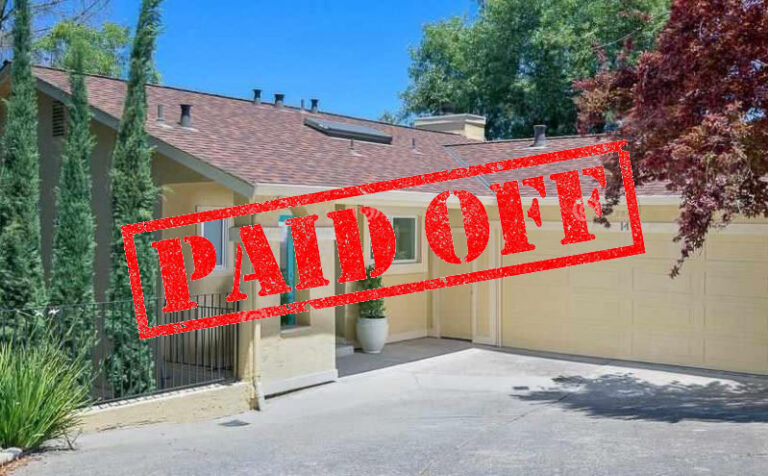
When the Bank Backs Out Mid-Exchange: A 1031 Exchange Lender Funds a 6-Unit Oakland Purchase

There’s a specific kind of panic that hits a real estate investor when bank financing wobbles in the middle of a 1031 exchange. The identification window doesn’t pause. The replacement property doesn’t wait. And the tax consequence of failing to close is not a rounding error.
That’s the situation this Oakland deal started from — and the reason the borrower needed a 1031 exchange lender who underwrites the property rather than the borrower’s pay stubs.
Why the Bank Said No — and It Wasn't the Property
The property penciled. Six units in a solid Oakland location, income in place, a purchase price the rents could support. On the asset alone, this was a financeable building.
The borrower had recently started a new job.
That was it. That was the whole problem. Conventional multifamily underwriting doesn’t just evaluate the building — it evaluates the person signing the note. A bank’s question isn’t only “does this property produce enough income,” it’s “what happens if the tenants stop paying and the borrower has to cover the debt service personally?” A borrower who is six weeks into a new job, however well-qualified, hasn’t yet produced the employment history a bank’s credit committee wants to see. The loan gets flagged, and the loan the borrower was counting on evaporates.
Investors are often blindsided by this. You can bring a good building, a real down payment, and a sound plan, and still get declined for a reason that has nothing to do with the real estate. This borrower was rolling the 1031 exchange proceeds into the purchase — the exchange was already in motion — so “come back in a year with two years of W-2s” wasn’t an option.
That’s the gap Rubicon Mortgage Fund, LLC exists to fill. We are an asset-based lender. We underwrite the property, its income, and the equity position first. A borrower’s employment tenure is not what makes or breaks a loan in our Fund, because our protection is the asset and the equity cushion in front of us — not a guarantor’s job title.
The Purchase Story: Buying Below What It Cost to Build
Here’s the part of this deal that made us comfortable.
The property started life as a five-unit building. A prior owner added a sixth unit, and that build-out was not cheap — new construction in Oakland rarely is. Between the original acquisition and the cost of creating that additional unit, the seller’s all-in basis was substantially higher than what our borrower paid to buy the finished six-unit property.
The seller sold at a loss. Our borrower bought at an attractive price.
For a lender, that’s a meaningfully different risk picture than a purchase at the top of a run-up. The borrower’s cost is below what it would take to replicate the building today, which means the equity protecting our loan isn’t dependent on the market continuing to appreciate — it’s already there, embedded in the price.
It’s a different picture for the borrower too. The same rent roll produces a materially better yield on a lower purchase price. Whatever went wrong for the previous owner, the new owner starts from a stronger position on the same physical building.
Why the Deal Came to Us: We Work With Other Private Lenders
Here’s the part of this story worth telling.
The loan was referred to us by a broker at another private money lender. There was an existing private lender in place, but that lender didn’t have sufficient funds available to underwrite and fund the new, larger request.
That’s not a knock on them — it’s the reality of running a private debt fund. Capital availability changes. Allocations get committed. A lender who can carry the existing note may not be positioned to write a larger one at the time needed.
We do this kind of deal all the time. We regularly fund loans alongside, or in place of, other private lenders and debt funds that can’t perform on a particular transaction — a liquidity constraint, a concentration limit, a size threshold, a timeline they can’t hit. We treat other private lenders as friendly competitors, not enemies. When a loan is a better fit in our fund than in theirs, everyone still comes out fine: the broker earns their fee, the outgoing lender is taken out cleanly, and the borrower gets a loan that actually closes.
If you’re a private lender or debt fund holding a file you like but can’t fund, we’re a phone call. If you’re a mortgage broker whose lender just went quiet mid-deal, same.
The Business Plan: Furnished Mid-Term Rentals for Travel Nurses
The borrower isn’t buying this as a passive hold. There’s a hospital within walking distance — a block or so away — and his plan is to operate the units as furnished mid-term rentals aimed at travel nurses, working toward a direct pipeline with the hospital.
The model is straightforward: pre-furnish and pre-stage the units so an arriving nurse on a 13-week contract can move in with a suitcase. Furnished mid-term rentals typically command a premium over unfurnished annual leases, and healthcare travelers are a durable, repeat source of demand when you’re across the street from the demand generator.
Two units were vacant at acquisition, which gives him somewhere to start proving the concept without disturbing the existing residents.
Is it a more operationally involved plan than collecting twelve monthly checks? Yes. Does it pencil at his basis? That’s the point of buying right.
How It Came to Us — and Why It Wasn't a Fire Drill
The loan was referred by Gantry, a well-respected national capital markets and mortgage brokerage. When a broker of that caliber brings a loan that a bank couldn’t complete, it’s usually not because the deal is bad — it’s because the deal doesn’t fit a box.
Worth noting: this was not a rush. The borrower and broker took their time, and so did we.
There’s a persistent assumption that private money means a frantic 10-day close and a premium paid for speed. Sometimes that’s exactly the product. But a private loan is also just the right structure for a deal a bank can’t underwrite, whether it closes in ten days or forty. Nobody here was cutting corners because a clock was running out.
The Exit
The path forward is clean and conventional:
- Stabilize the asset — fill the vacancies, get the mid-term rental operation running.
- Season the cash flow — produce a track record showing the property performing on its business plan.
- Refinance into bank debt — with the property stabilized and the borrower further into his employment history, the conventional financing that wasn’t available at purchase becomes available at takeout.
That’s what a short-term loan is supposed to do. It bridges a specific, identifiable gap — here, the gap between “this borrower can’t document employment yet” and “this borrower can” — and then it gets replaced.
Takeaways for Investors and Brokers
- A bank decline is often about the borrower, not the building. New job, self-employment, a recent career change, income that’s real but hard to document — none of that changes the quality of the asset. An asset-based lender reads the same building differently.
- Don’t let a financing problem blow up a 1031 exchange. If your bank goes quiet mid-exchange, a private lender can close on the replacement property and be refinanced out later. Losing the exchange is the expensive outcome.
- Buying below replacement cost gives both borrower and lender a cushion that doesn’t depend on the market cooperating.
- Private money isn’t only for speed. It’s for structure. Some of our best loans are ordinary timelines with a story a bank’s box can’t hold.
Need a 1031 Exchange Lender?
Rubicon is a direct California private money lender on multifamily, commercial, non-owner-occupied residential, and land. We fund purchase money loans, commercial bridge loans, and refinances — including 1031 exchange purchases where conventional financing has fallen through — and we work directly with mortgage brokers and other private lenders.
Buying with 1031 proceeds, or holding a loan your bank just declined? Contact Rubicon to talk through the structure.
To see more funded deals, click here!
To keep up with us, click here!