How Rubicon Mortgage Fund, LLC Helped a Local Investor Execute a Complex Reverse 1031 Exchange

Not every Reverse 1031 Exchange follows the textbook. Sometimes the deal has layers that a traditional bank simply cannot underwrite, and the investor needs a lending partner who can think creatively, move quickly, and adapt as the transaction evolves. That is exactly the kind of situation Rubicon Mortgage Fund, LLC was built for.
This story is from a recent transaction we closed for a local Bay Area investor navigating a complex Reverse 1031 Exchange.
The Situation: A Reverse 1031 Exchange with a Mandate to Buy in All Cash
Our client was a local investor with deep roots in the Bay Area. They operate a family concrete business that supplies major development projects throughout the region, and over the years they have been strategically growing a real estate portfolio alongside their operating business.
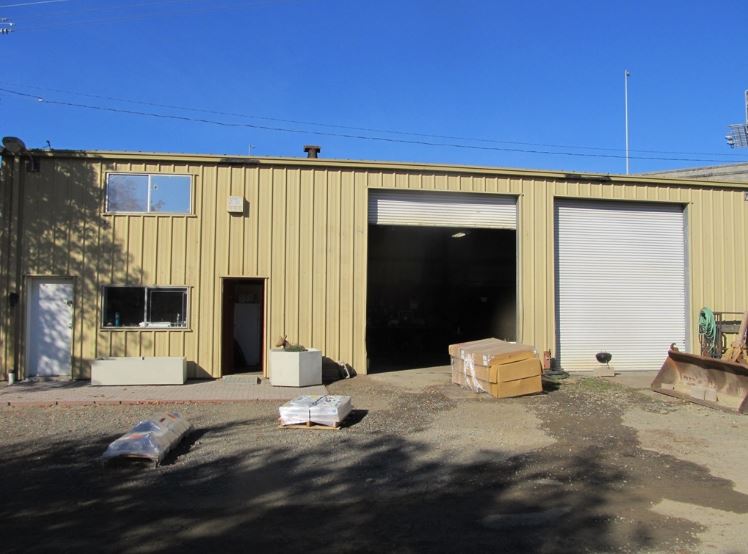
The goal in this transaction was to purchase two multi-tenant industrial buildings in Sacramento, and subsequently sell the relinquished industrial property in Richmond, California, via Reverse 1031 Exchange.
Here is where it got complicated.
In a standard 1031 Exchange, you sell your relinquished property first, then use the proceeds to acquire the replacement property. A Reverse Exchange flips that sequence. You acquire the replacement property first, then sell the relinquished property within 180 days.
In this case, the transition structure added an additional requirement that made the transaction significantly more challenging: the two Sacramento replacement properties had to be acquired entirely in cash. No debt could be on those properties upon acquisition. The combined purchase price was $9,025,000, and our client did not have $9,025,000 in liquid cash available.
They needed a solution, and the clock was ticking.
Why They Could Not Go to a Traditional Bank
This is a question we hear often: why did they come to a private lender instead of a bank?
The answer comes down to how a Reverse Exchange is structured. To comply with IRS rules, the investor cannot hold title to both the replacement and relinquished properties simultaneously. This requires a specific legal structure during the exchange period that involves holding title through a separate entity, which tends to make traditional lenders nervous. Their underwriting guidelines, timelines, and documentation requirements simply are not built to accommodate the moving parts of a live reverse exchange.
For us, the structure is secondary. We focus on the real estate, the borrowers, and the overall deal. That is where private lending has a distinct advantage.
The Solution: A $9,025,000 Portfolio Cash-Out Loan
To solve the all-cash requirement, our client pledged three free-and-clear properties as collateral:
- The Richmond industrial property they intended to sell as part of the exchange
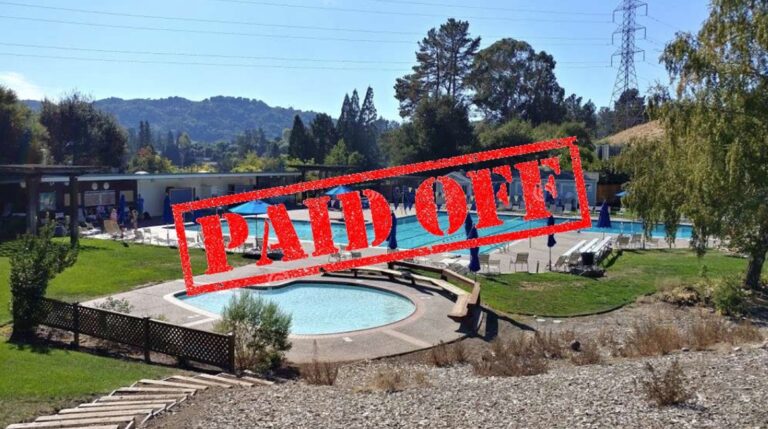
- Two non-owner-occupied single family residences in Tahoe: one lakefront in Carnelian Bay, and one located two blocks off the lake
We underwrote a portfolio loan across all three properties. Our internal combined value met our loan-to-value guidelines.
We provided a $9,025,000 cash-out loan, and the client used those proceeds to purchase the two Sacramento industrial properties entirely in cash, satisfying the all-cash acquisition requirement of the transaction structure.
From the outside, the Sacramento acquisition looked like a straightforward cash purchase. No debt on the properties. The Reverse Exchange could proceed.
The Deal Evolved: Substitution of Collateral
After the Sacramento properties were acquired, our client proceeded to sell the Richmond property to the tenant who had been leasing the space for over five years, at a sale price of $10,000,000.
Upon the Richmond closing, we released that property from our note. We then executed a substitution of collateral, removing Richmond and adding the two Sacramento industrial properties as additional collateral to our note.
As the loan stands today, our collateral consists of four properties: the two Sacramento multi-tenant industrial buildings and the two non-owner-occupied Tahoe residences. Our loan balance is $9,025,000. All four properties are secured by first deeds of trust.
The Exit Strategy
The loan includes a guaranteed interest period, and once that window closes, the borrowers plan to refinance the Sacramento properties through a conventional bank. That refinance will pay down the loan balance by a meaningful amount. The remaining balance will be retired through either a future property sale or a cash payoff.
The Sacramento properties are well-positioned for the long term: stabilized, fully occupied, right off the highway, with below-market rents that give the client room to increase income over time. No major renovation is planned. The strategy is straightforward: hold, grow rents, and build long-term wealth.
What Made This Deal Work
A transaction like this does not come together without a few key ingredients.
Strong sponsors. Our borrowers are seasoned, local investors with a track record, a successful operating business, and significant personal guarantees behind the loan. That matters when underwriting a complex deal structure.
Strong collateral. Multi-tenant industrial in Sacramento and non-owner-occupied single family homes in Tahoe are asset types and locations we understand and value with confidence. The Cornelian Bay properties represent particularly strong collateral given their waterfront and near-waterfront positioning.
Creative structure. The transaction changed shape multiple times while we were working on it. The all-cash acquisition requirement, the timing of the Richmond sale, the substitution of collateral, and the portfolio approach all had to be coordinated simultaneously. A standard lender would have walked away. We kept working.
Local knowledge and direct decision-making. Because we are a local private lender, we could sit down with the borrowers, understand the full picture, and make decisions quickly. There was no committee, no loan file bouncing between departments, no waiting on a bank’s timeline.
The result: our client completed their reverse 1031 exchange, deferred significant capital gains tax on the Richmond sale, and acquired two cash-flowing industrial properties in Sacramento to hold for the long term.
What Is a Reverse 1031 Exchange?
For investors who are newer to this strategy, here is a quick breakdown.
A Reverse 1031 Exchange is a tax-deferral tool under Section 1031 of the Internal Revenue Code. It allows a real estate investor through a qualified intermediary to acquire a replacement property before selling their relinquished property, and then complete the sale of the relinquished property to close out the exchange. The IRS formally recognized the reverse exchange structure in Revenue Procedure 2002-83.
The key rules include:
- The entire exchange must be completed within 180 days
- The replacement property must be identified within 45 days of the EAT acquiring it
- Both properties must be held for investment or business use (i.e. “Like-Kind)
- A Qualified Intermediary must facilitate the transaction
- The investor cannot hold title to both properties simultaneously
The Reverse Exchange is more complex than a standard forward exchange and almost always requires more creative financing, because the investor is acquiring a new asset before unlocking the equity in the property they are selling. In situations like this one, where additional constraints are layered on top of the standard structure, a private lending partner becomes essential.
Why the Right Lending Partner Changes Everything
The 1031 Exchange (whether a standard or Reverse Exchange) is one of the most powerful tax-deferral strategies available to real estate investors, but it only works if the execution is flawless. Timing, documentation, and financing all have to come together within a fixed window. One piece falls apart, and the entire exchange is at risk along with the tax deferral that motivated the deal in the first place.
At Rubicon Mortgage Fund, LLC, we are not here to check boxes. We are here to find solutions. Whether that means a cash-out loan, a substitution of collateral mid-transaction, a bridge to a bank refinance, or a structure we have not seen before, we are willing to dig into the complexity and figure out how to make it work.
If you are working through a Reverse Exchange or any complex real estate transaction that requires flexible, fast capital from a lender who understands the details, reach out to our team. We would like to hear about your deal.
Contact Rubicon Mortgage Fund, LLC today.
To see more funded deals, click here!
To keep up with us, click here!