Hard Money Cash Out Refinance in Action: $750,000 on an Albany, CA Rental Property
Most borrowers assume a cash-out refinance has to pay for work on the property being financed. Sometimes the smarter move is the opposite: use the equity in the rental you already control to fund the one that actually needs the money.
That’s how this Albany, California deal came together — a hard money cash out refinance that retired an expensive private loan and freed up working capital for a different property in the borrower’s portfolio. It’s also a good look at something we do routinely but rarely talk about: funding deals other private lenders can’t complete.
The Situation: A Good Property Behind an Expensive Loan
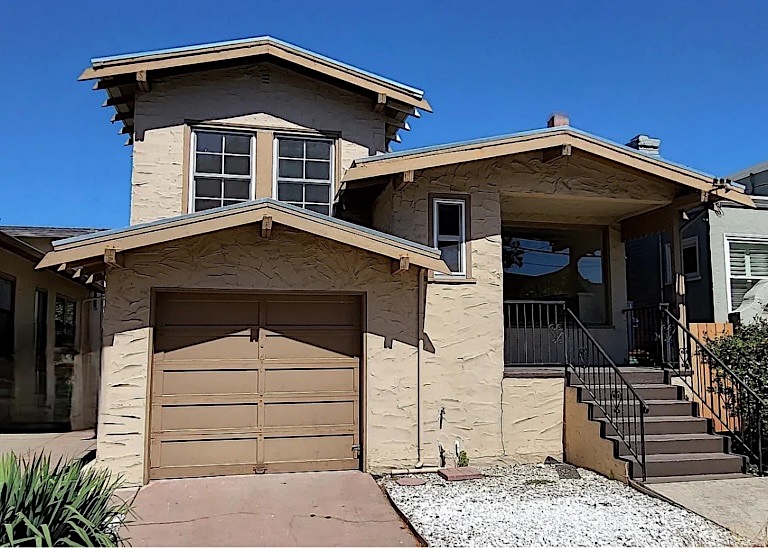
The subject property is a 1,804-square-foot single-family home on a 3,000-square-foot lot in Albany — a dense, well-established East Bay rental market between Berkeley and El Cerrito, with steady tenant demand and one of the more sought-after school districts in the area. It’s the kind of non-owner-occupied asset we like: stable, rented, and in a location that holds value through cycles.
The property is held in a family trust, and the borrower owns several other rental properties. There was already a loan in place from another private lender, at a rate well above market for the risk profile.
Meanwhile, a different property in the portfolio needed capital. Tenant improvements and deferred repairs had to get done for that property to perform, and the borrower didn’t want to sell any assets or wait out a bank timeline to fund the work.
Two problems at once: an overpriced loan on a good property, and a capital need on a different property. One transaction solved both.
The Structure: One Loan, Two Jobs
We funded a $750,000 refinance on the Albany rental. The proceeds did two things at once:
- Retired the existing private loan in full, taking out the incumbent lender at closing.
- Released a portion of the remaining equity as cash-out working capital, earmarked for tenant improvements and capital repairs on another rental property in the borrower’s portfolio.
Note the leverage discipline. This wasn’t a maximum-proceeds cash out. The borrower took only what the other project actually required, leaving meaningful equity in the property. That’s a real distinction in underwriting: a borrower pulling a defined amount for a defined, income-producing use is a very different credit risk than one stripping every available dollar of equity out of an asset.
The economics: the new loan priced materially below the rate on the loan it replaced. The borrower walked away paying a lower rate on a larger balance — cutting the annual interest cost while taking cash out. Lower rate, more proceeds, one closing.
That’s the part borrowers tend to miss. If you’re sitting on an above-market private loan, a hard money cash out refinance isn’t automatically a step up in cost. Priced correctly, it can take money off your annual interest bill and put cash in your pocket at the same time.
Why the Deal Came to Us: We Work With Other Private Lenders
Here’s the part of this story worth telling.
The loan was referred to us by a broker at another private money lender. There was an existing private lender in place, but that lender didn’t have sufficient funds available to underwrite and fund the new, larger request.
That’s not a knock on them — it’s the reality of running a private debt fund. Capital availability changes. Allocations get committed. A lender who can carry the existing note may not be positioned to write a larger one at the time needed.
We do this kind of deal all the time. We regularly fund loans alongside, or in place of, other private lenders and debt funds that can’t perform on a particular transaction — a liquidity constraint, a concentration limit, a size threshold, a timeline they can’t hit. We treat other private lenders as friendly competitors, not enemies. When a loan is a better fit in our fund than in theirs, everyone still comes out fine: the broker earns their fee, the outgoing lender is taken out cleanly, and the borrower gets a loan that actually closes.
If you’re a private lender or debt fund holding a file you like but can’t fund, we’re a phone call. If you’re a mortgage broker whose lender just went quiet mid-deal, same.
The Borrower and the Exit
The borrower is a portfolio owner rather than a full-time institutional investor: several rental properties, a solid balance sheet, and long-term ownership intent on the Albany asset.
On exit, there’s more than one credible path — exactly what we want to see on a short-term note:
- Refinance into conventional bank debt. With the property stabilized and rented, a bank takeout is straightforward.
- Sell other rental properties in the portfolio and use proceeds to pay our loan down or retire it entirely.
We don’t need a borrower to have one perfect exit. We need them to have options, and for the property and the balance sheet to support more than one of them. This file did.
Takeaways for Investors
- A cash-out refinance on a rental property doesn’t have to be spent on that property. Equity in a stabilized asset is portfolio capital. If the highest and best use of those proceeds is tenant improvements on a different building, that’s a sound use — and we’ll underwrite it that way.
- A high-rate private loan isn’t a life sentence. If you’re paying above market on a loan secured by a good, non-owner-occupied property, the refinance math is often better than you assume. This borrower lowered the rate and took cash out in the same transaction.
- Trust-held and portfolio-owned properties are normal for us. Family trust vesting, multiple properties, non-owner-occupied — none of that slows us down the way it can at a bank.
- We are a takeout for other private lenders. Insufficient capital, size limits, timing. If another fund can’t perform, we frequently can.
Have a Hard Money Cash Out Refinance?
Rubicon Mortgage Fund is a direct private money lender on non-owner-occupied residential, multifamily, commercial, and land throughout California. We fund purchase money loans, commercial bridge loans, refinances, and hard money cash out refinances — and we work directly with mortgage brokers and other private lenders.
Have a rental property with trapped equity, or a commercial bridge loan that needs to be taken out? Contact Rubicon Mortgage Fund to talk through the structure.
To see more funded deals, click here!
To keep up with us, click here!