Private Money Lending for Complex Commercial Real Estate Situations
Not every commercial real estate transaction fits a standard template. Unusual property types, complex ownership structures, compressed timelines, and deals that require creative loan structuring all call for a lender that evaluates each situation on its own merits. Private money lending exists precisely for these circumstances.
Rubicon Mortgage Fund, LLC has been financing complex commercial real estate transactions across California since 2008. Based in Lafayette in the San Francisco Bay Area, we serve borrowers throughout Northern California, the Bay Area, Sacramento, Los Angeles, San Diego, Orange County, and statewide. Our lending decisions are based on the collateral and the viability of the deal, not on standardized credit matrices.
Types of Complex Situations We Finance
- Loans to trusts, estates, LLCs, corporations, and partnerships
- Note hypothecations and note purchases
- Blanket loans collateralized across multiple properties
- Cross-collateralized structures to maximize available loan proceeds
- Partner buyouts and ownership transitions
- Foreclosure and pre-foreclosure situations
- Bankruptcy and post-bankruptcy lending
- Properties with title, zoning, or entitlement complexity
- Special purpose and non-standard property types
How Rubicon Approaches Non-Standard Deals
Every loan request is evaluated on the strength of the collateral, the equity position in the property, and the viability of the borrower's plan and exit strategy. Rubicon physically inspects every property. No personal credit check, tax returns, or income documentation is required. We have the experience and the flexibility to structure loans that institutional lenders cannot, and we have been doing it across California since 2008.
If your situation involves any of the above or something not listed here, contact Rubicon Mortgage Fund, LLC and describe the deal. We will give you a direct answer on whether we can help and what structure makes sense.
Lending Criteria
- Loan amounts from $500,000 to $15,000,000
- Up to 65% loan-to-value (LTV)
- First position only
- Statewide California coverage
- No credit check required
- Loan terms from 6 months to 24 months
Get Started
Contact Rubicon Mortgage Fund, LLC with the details of your situation. We serve borrowers throughout California including the San Francisco Bay Area, Northern California, Sacramento, Los Angeles, Orange County, and San Diego. We typically provide an initial response and preliminary terms within 24 hours of inquiry.
Rubicon Mortgage Fund writes complex loan structures on California commercial real estate — the deals that get declined not because the collateral is weak, but because the shape of the transaction does not fit a form.
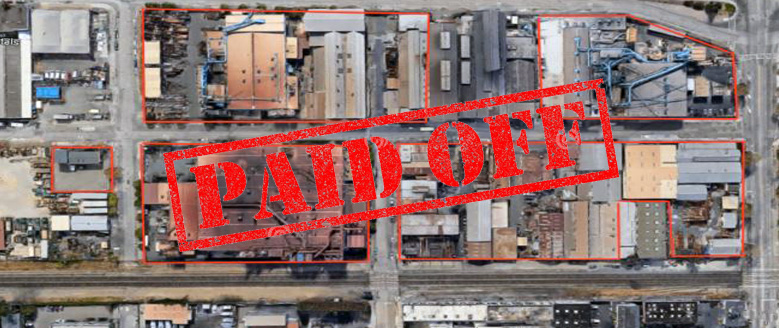
The Complex Loan Structures We Are Asked For Most
Debtor-in-possession lending
A company operating in Chapter 11 still has to fund operations, and its existing lenders are frequently unwilling or unable to advance more. Debtor-in-possession financing fills that gap, and it requires bankruptcy court approval rather than just a credit decision.
Very few private lenders will engage with it at all. Rubicon has — including a $1,315,000 debtor-in-possession loan in Rancho Mirage. If you are in or approaching Chapter 11, the useful conversation happens with your bankruptcy counsel in the room from the start.
Cross-collateralization and blanket loans
When one property will not support the proceeds a deal needs, pledging a second property often will. A blanket loan secures one loan across several properties; cross-collateralization adds an additional property to an existing structure to raise available proceeds.
This is one of the most useful tools we have and it is routinely what makes a marginal transaction fundable. Our Oakhurst mobile home park acquisition closed this way, cross-collateralized against a rental property the borrower owned in Stockton.
Note purchases and hypothecation
A note holder who needs liquidity has two routes: sell the note, or borrow against it. Hypothecation keeps the note and the income stream in the holder’s hands while releasing capital against it. Selling converts it outright, usually at a discount. Which is better depends entirely on whether you want the paper back.
Partner buyouts and ownership transitions
Partnerships end. Sometimes amicably, sometimes not, and frequently on a deadline set by an agreement written years earlier. The property is usually the main asset and the departing partner wants cash rather than a share of a future sale.
Financing this is a lending problem rather than a valuation problem, and it is closely related to the structures on our loans to trusts and estates page, where the same dynamic plays out between siblings instead of partners.
Pre-foreclosure and time-critical situations
A recorded notice of default starts a clock that does not care how good the property is. These are fundable, but the timeline shrinks every week and the options narrow with it. Early is the whole game.
What Actually Makes a Deal Too Complex
Almost nothing on the list above disqualifies a loan by itself. Three things genuinely do.
No credible exit. Short-term lending is repaid by a refinance or a sale. If neither is realistic, additional debt makes the borrower’s position worse, not better, and we will say so rather than write it.
Not enough equity in the property. Structure cannot manufacture collateral value that is not there.
Facts disclosed late. A title issue, a lien, a bankruptcy, a pending action — none of these is fatal at the start and most become fatal in escrow. Tell us everything in the first conversation. We have almost certainly seen it before.
Full parameters are on our borrowers and lending criteria page, and closed transactions are listed under funded loans.
Complex Loan Structures: FAQs
Do you lend to borrowers in bankruptcy?
In the right circumstances, yes. Debtor-in-possession lending requires bankruptcy court approval, so bring your counsel in early.
Can you cross-collateralize property I already own?
Yes, and it is frequently what makes a deal work when a single property will not support the proceeds needed.
Will you lend against a note I hold?
Yes. Note hypothecation lets you raise capital without giving up the note.
There is a notice of default recorded. Is it too late?
Not necessarily, but the timeline is the constraint. Call the same week rather than the same month.
The ownership is a trust and two LLCs. Does that matter?
No. We lend to individuals, LLCs, corporations, trusts and partnerships, and entity complexity is normal here rather than exceptional.
Do you require an appraisal or a credit check?
Neither. Someone from Rubicon inspects the property in person.
My deal is not on this list. Should I still call?
Yes. The list describes what we see often, not what we are limited to.
Are complex loan structures regulated in California?
Yes. Rubicon lending is made or arranged pursuant to California Financing Law and overseen by the California Department of Financial Protection and Innovation. All loans are business purpose and secured in 1st position.